
E-commerce Store Automation
Home»E-commerce Store Automation
E-commerce
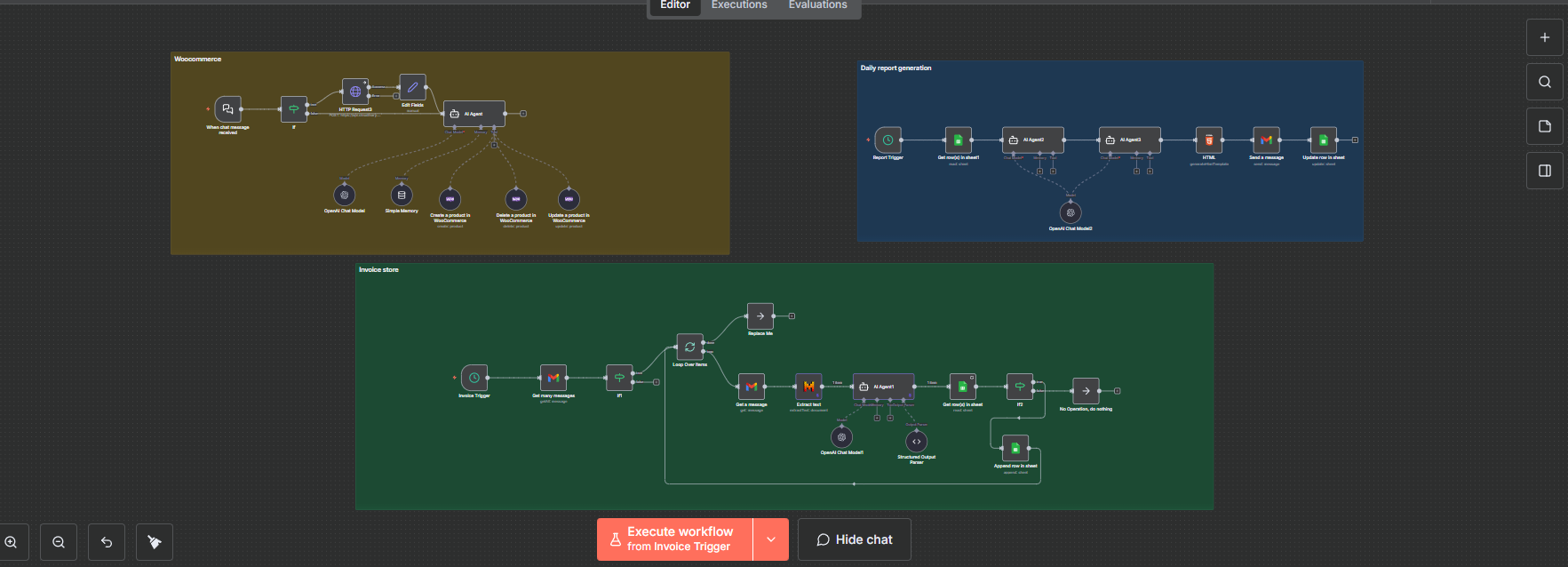
Automates order processing, inventory updates, and customer follow-up for WooCommerce stores.
The problem
As order volume grows past what one person can track by hand, the same daily checklist — update inventory, update order status, notify the customer, watch for low stock — starts to fall behind, and the first symptom is usually a customer finding out a product is out of stock only after trying to buy it.
How it works
When a new order comes in, inventory counts, order status, and customer notifications update automatically, replacing what’s often a daily manual checklist of the same few steps repeated for every order.
The workflow is built specifically around WooCommerce’s existing product and order structure, so it maps onto a store as it already exists rather than requiring a platform migration to adopt — it works with the store a merchant already has, not a replacement for it.
Customer follow-up — shipping updates, delivery confirmation, review requests — runs on the same automated trigger, which is usually the first thing to fall behind once order volume grows past what one person can track by hand.
Low-stock conditions are flagged automatically rather than being discovered only when a customer tries to buy something that’s already out, which is one of the more common and avoidable failure points in a manually run store.
Key capabilities
- Updates inventory and order status automatically on new orders
- Built specifically for WooCommerce — no platform migration required
- Automates shipping and delivery follow-up messages
- Flags low-stock conditions before they become out-of-stock sales
- Removes the daily manual order-processing checklist
Built on
- n8n for workflow orchestration
- WooCommerce REST API integration
- Inventory and order-status automation
- Email/notification integration for customer follow-up
Best for: WooCommerce store owners still processing orders, inventory, and follow-up manually as order volume grows.